
An Old Village Inside Troy
Lansingburgh is older than the city around it. Abraham Jacob Lansing bought the land in 1763, laid it out in lots and incorporated it in 1771, and it stayed its own village until Troy annexed it around 1900. His 1771 plan showed 288 lots bounded by North, East and South streets and the river, and that grid, with its alleys and village green, still survives.
In 2023 the Central Lansingburgh Historic District, roughly 110th Street to 120th Street, was approved for the National Register. It counts 592 historic buildings put up between 1775 and 1925. The Old House at 580 First Avenue, dated to about 1720, is the oldest known building in the neighborhood, and Herman Melville lived at 2 114th Street from 1838 to 1847.
Lansingburgh Houses
This is some of the oldest housing in the area. In the central Lansingburgh census tract around 112th to 120th streets, about 72 percent of homes were built in 1939 or earlier and none after 2000, and about 59 percent of units sit in two-to-four-unit buildings. South toward 107th Street the tract is about 61 percent pre-1940, and north around 125th Street it is about 63 percent.
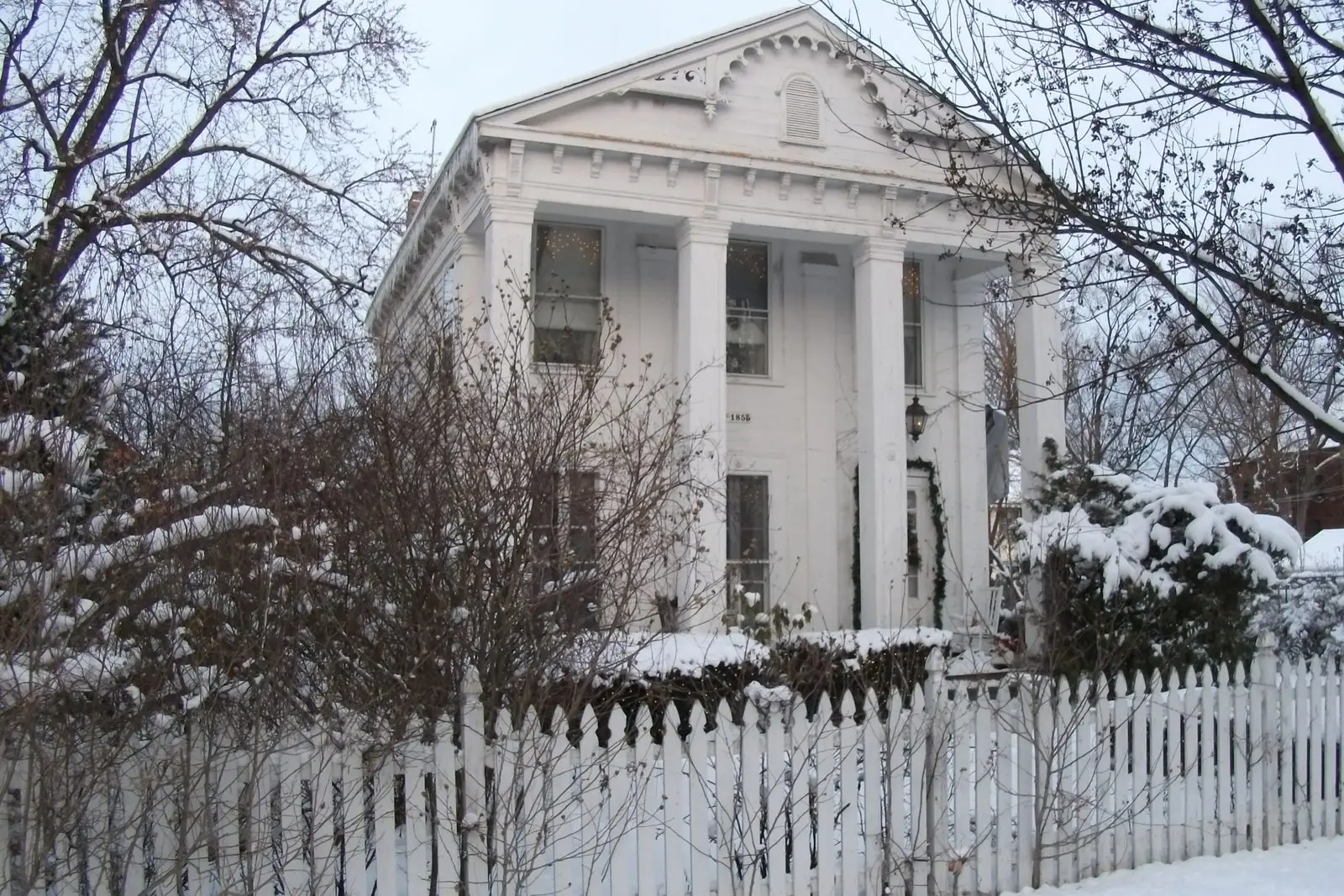
Across ZIP 12182, about 72 percent of homes heat mainly with gas and about 18 percent with electricity, with close to 5 percent still on fuel oil. The finer houses from the 1840s are two-story brick townhouses with parapet end walls; one at 554 First Avenue was built about 1844 for a brush maker.
What We Run Into Here
A house built before the Civil War has been through several heating systems. Heat here can mean a gas boiler feeding old radiators, a furnace added later with ducts run through closets, electric heat in apartments carved out of big houses, or window units for summer. In the two-families common here, each floor often has its own system, or one boiler serves both units.
For cooling, ductless units are the usual fit in houses without ducts. On historic district blocks, check with the city on outdoor equipment placement before you plan anything. Lansingburgh is inside the City of Troy, so permits go through Troy's building permit office.
Lansingburgh heat or AC? Call us.
Call (838) 884-0024Streets and Landmarks
We work along First through Seventh avenues, 107th, 112th, 114th and 125th streets, and Northern Drive. US 4 runs up Second Avenue and crosses to Waterford on the Troy-Waterford Bridge, and the 112th Street Bridge brings NY 470 over from Cohoes. Landmarks include the Lansingburgh Academy building at Fourth Avenue and 114th Street, now a branch of the Troy library, Trinity Church at 585 Fourth Avenue, the Lansingburgh Village Burial Ground at Third Avenue and 107th Street, founded in 1771, and Melville Park on First Avenue.
Lansingburgh Questions
Can you work on an old house in the Lansingburgh historic district?
Yes. Old houses need care with where equipment goes and how lines are run. For anything visible from the street, check with the City of Troy first about historic district rules.
Does Lansingburgh use Troy for building permits?
Yes. Lansingburgh is part of the City of Troy, so heating and cooling permits go through the Troy Bureau of Code Enforcement.
My two-family has one boiler for both floors. Can the upstairs get its own heat?
Usually. The options are zoning the existing boiler so each floor has its own thermostat, or adding a separate system, like a ductless heat pump, for the upstairs unit.