
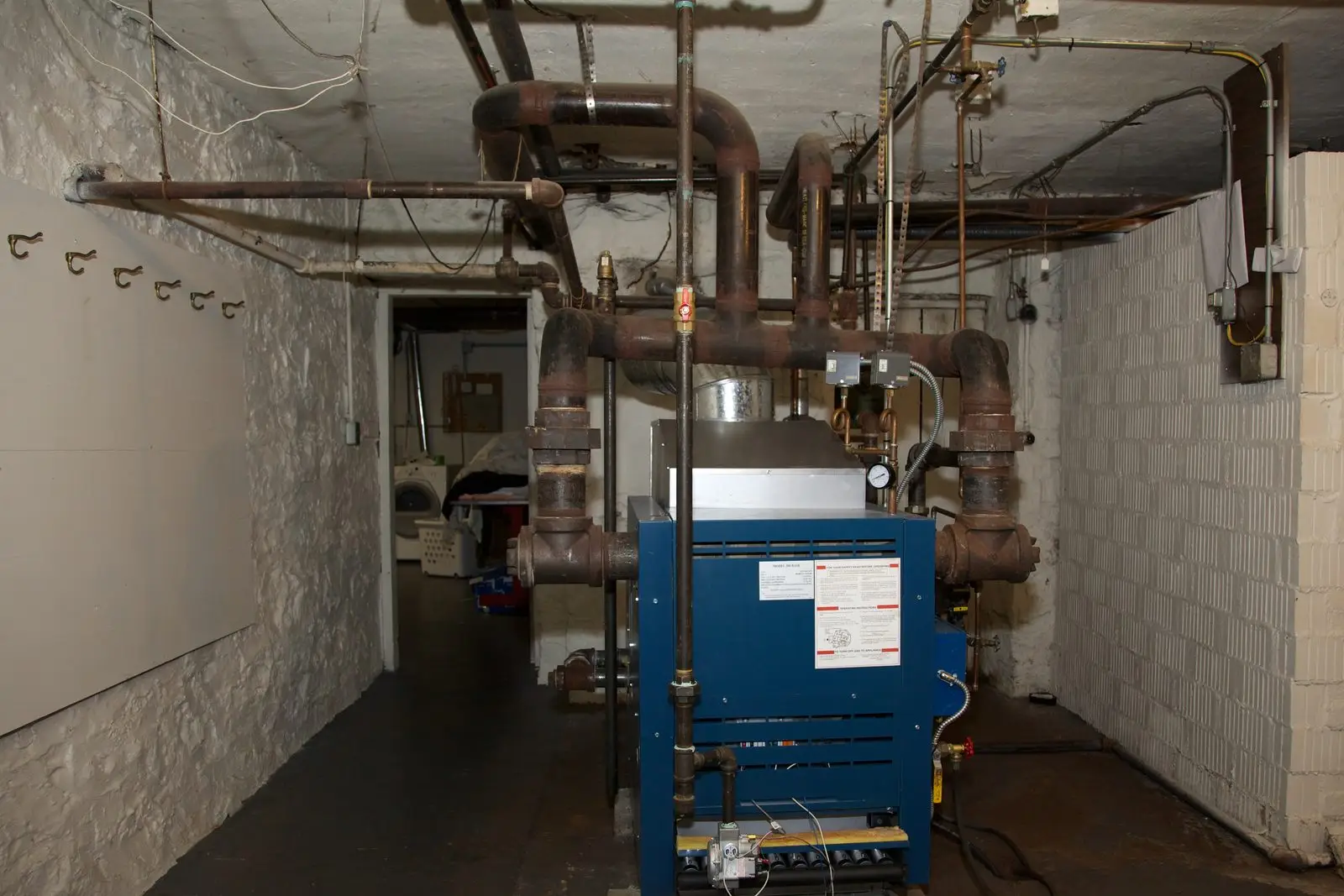
Radiator Heat in Troy
If your house heats with radiators or baseboard, it has a boiler, either steam or hot water. Over half of the city's housing dates to 1939 or before, per the Census numbers for Troy, and roughly 72 percent of homes heat mainly with natural gas.
Boiler work is its own trade. Steam in particular runs on low pressure, gravity and air vents, and small things like a clogged vent or a radiator that has settled out of pitch cause most of the complaints. We repair both kinds of systems, one-family and multi-family.
Steam Heat
A steam boiler boils water, and the steam rises through the pipes to the radiators, pushing air out through vents as it goes. It condenses back to water and drains back to the boiler. One-pipe systems carry steam up and water back down the same pipe. Two-pipe systems have a separate return.
- Sight glass and water level. Too little water trips the low-water cutoff and shuts the boiler down. Too much causes banging and wet steam.
- Low-water cutoff. The safety control that stops the burner when the water drops.
- Pressure control. Residential steam should run at very low pressure. Set too high, it causes short heating cycles and noise.
- Main and radiator vents. Stuck vents mean cold radiators. Failed vents hiss and spit.
- Pitch. Radiators and pipes have to slope so water can drain. When a floor settles, banging starts.
Hot Water Heat
A hot water boiler heats water and a circulator pump moves it through radiators or baseboard and back. The system stays full of water under light pressure.
- Circulator pumps. A failed pump means a hot boiler and a cold house.
- Expansion tank. A waterlogged tank makes the pressure swing and the relief valve drip.
- Zone valves and thermostats. One cold zone often traces back to a stuck valve.
- Air in the lines. Gurgling and cold tops of radiators point to trapped air.
- Pressure. A system that keeps losing pressure has a leak or a failing relief valve.
Boiler or radiator trouble? Call us.
Call (838) 884-0024Keep It, Replace It or Add a Heat Pump
A boiler that has quit for good does not have to be replaced with the same thing. Efficiency is measured as AFUE, and Energy Star's boiler page says a boiler has to reach 90 percent AFUE or better on gas, or 87 percent on oil, to earn the label. The Department of Energy's boiler guidance notes that the rules differ for steam and hot water boilers.
- A new steam boiler keeps the pipes and radiators you have.
- A switch to hot water opens the door to high-efficiency condensing boilers, but the piping has to suit it.
- An air-to-water heat pump can feed hot water radiators. National Grid recommends them for homes that heat with hot water boilers, and its upstate heat pump program page lists current terms.
Old Pipe Wrap and Safety
Many old steam and hot water pipes are covered in white wrap. The EPA's asbestos overview lists asbestos-wrapped heating pipes among the places it turns up in homes, and you cannot tell by looking. Material in good shape that will not be disturbed is not likely to be a risk, per the EPA's guidance for families. If work would disturb it, have it tested and handled by an asbestos abatement contractor first. New York's rules are on the state health department's asbestos page.
Keep anything that can burn at least three feet from radiators and boilers, and have heating equipment and chimneys inspected every year, as the U.S. Fire Administration advises. New York's Amanda's Law requires carbon monoxide alarms in homes with fuel-burning appliances.
Boiler and Radiator Questions
Why is my radiator not getting hot?
It depends on the system. In a steam system, a cold radiator usually means a stuck air vent, a valve that is not fully open, or a radiator that has lost its pitch back toward the pipe. In a hot water system, trapped air is the common cause, along with low system pressure. If bleeding does not fix a hot water radiator, call us.
How do I tell if I have steam or hot water heat?
Look at the boiler. A steam boiler has a sight glass that shows the water level and a pressure gauge that reads in small numbers. A hot water boiler has a gauge showing pressure and temperature, plus an expansion tank. Steam radiators have one pipe or a small vent on the side. Hot water radiators have two pipes and a bleed valve.
Why is my steam radiator banging?
Banging is water hammer. Steam runs into water that is sitting in a pipe or a radiator that has lost its slope. It can also come from a boiler with too much water or a valve left half open. It is common in old steam houses and it can usually be fixed.
Why does my boiler keep losing pressure?
In a hot water system, falling pressure usually means a leak somewhere in the piping or radiators, a failing relief valve, or a waterlogged expansion tank. A boiler that runs short on water can shut down on its own safety controls, so call.
Why is my steam radiator hissing or spitting water?
A hiss while the steam comes up is the air vent letting air out, which is normal. Spitting water or a vent that keeps hissing after the radiator is hot usually means a failed vent, a radiator that has lost its pitch, or a boiler holding too much water. Vents wear out and are a common replacement.
Why is only half of my radiator hot?
On steam, a radiator that heats only partway across usually has a slow or undersized air vent, or it is short on steam time. On hot water, the cold part is often trapped air at the top or sludge at the bottom.
Why is my boiler running but the house is cold?
Check the thermostat first. On a hot water system, a failed circulator pump or a stuck zone valve keeps hot water from reaching the radiators. On steam, a tripped low-water cutoff or clogged main vents can keep steam from getting out to the house.
Is it worth keeping an old steam system?
Often it is. A steam system that is set up right heats evenly and quietly. National Grid's equipment life chart for New York lists steam boilers at about 25 to 30 years, and the pipes and radiators usually outlast several boilers. When the boiler itself fails, a new steam boiler, a switch to hot water, or a heat pump are all on the table.
Is the white wrap on my old heating pipes asbestos?
It might be. The EPA lists steam and hot water pipes wrapped in asbestos blanket or tape among the places asbestos turns up in homes, and you cannot tell by looking. Leave it alone if it is intact, and have an asbestos abatement contractor handle it before any work disturbs it.